The Fascinating History of the Panama Canal
- 1513–1880
-
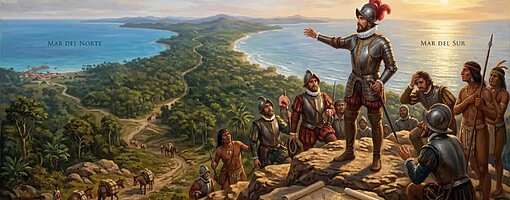
The Dream of an Interoceanic Passage
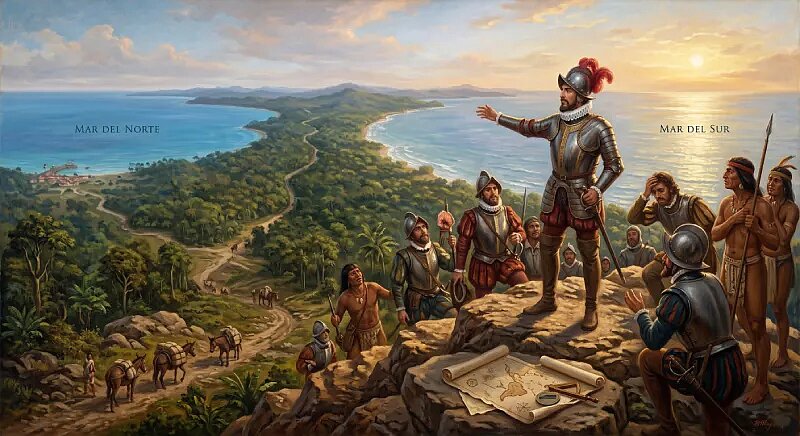
The Canal's history begins in 1513, when Spanish explorer Vasco Núñez de Balboa became the first European to cross the Isthmus of Panama and sight the Pacific Ocean. Immediately, the idea of a canal connecting the two oceans captured the imagination of explorers, traders, and monarchs. King Charles V of Spain ordered the first surveys in 1534, but the technology of the era made such a feat impossible.
For the following 350 years, the Isthmus of Panama became the most important overland route in the Americas: the Camino de Cruces and the Camino Real carried Peruvian gold and silver to Spanish galleons at Portobelo.
- 1881–1889
-
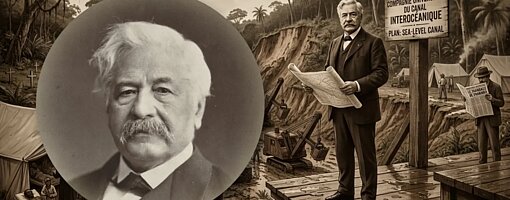
The French Attempt
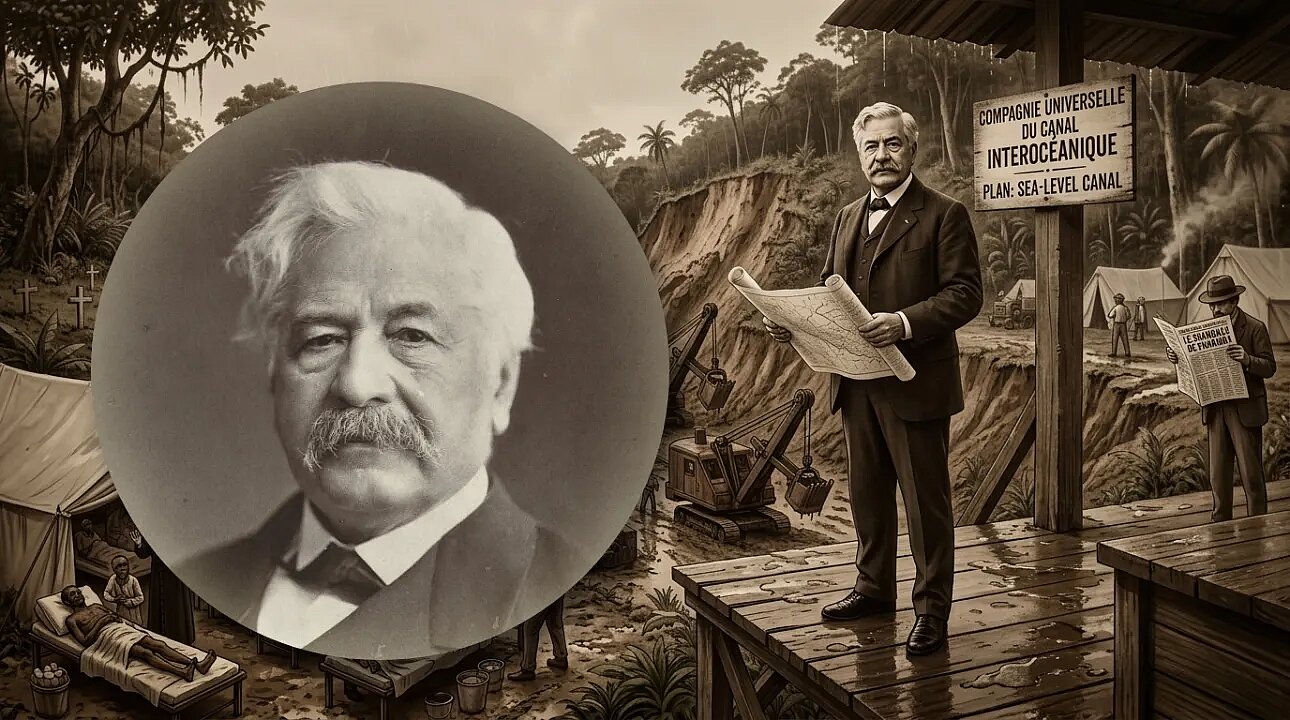
In 1881, Ferdinand de Lesseps — the hero who had built the Suez Canal — arrived in Panama with an ambitious plan to excavate a sea-level canal, without locks. The Compagnie Universelle du Canal Interocéanique raised millions of francs from French investors, but the project was doomed from the start.
The obstacles were overwhelming: dense tropical jungle, torrential rainfall, landslides in the Culebra Cut, and above all, tropical diseases. Yellow fever and malaria decimated the workforce. An estimated 22,000 workers died during the French attempt. In 1889, the company collapsed in one of the greatest financial scandals of the 19th century.
- 1904-1914
-
The American Era
In 1903, Panama declared independence from Colombia with U.S. support. The newly formed Panamanian government signed the Hay-Bunau-Varilla Treaty, granting the United States control of the Canal Zone in perpetuity. In 1904, the Americans resumed the project with a radically different approach.
Under Chief Engineer John F. Stevens and later Colonel George W. Goethals, the plan shifted from a sea-level canal to a lock-based design. Dr. William Gorgas was the unsung hero: applying the recent discovery that mosquitoes transmit yellow fever and malaria, he implemented a massive sanitation program that saved countless lives.
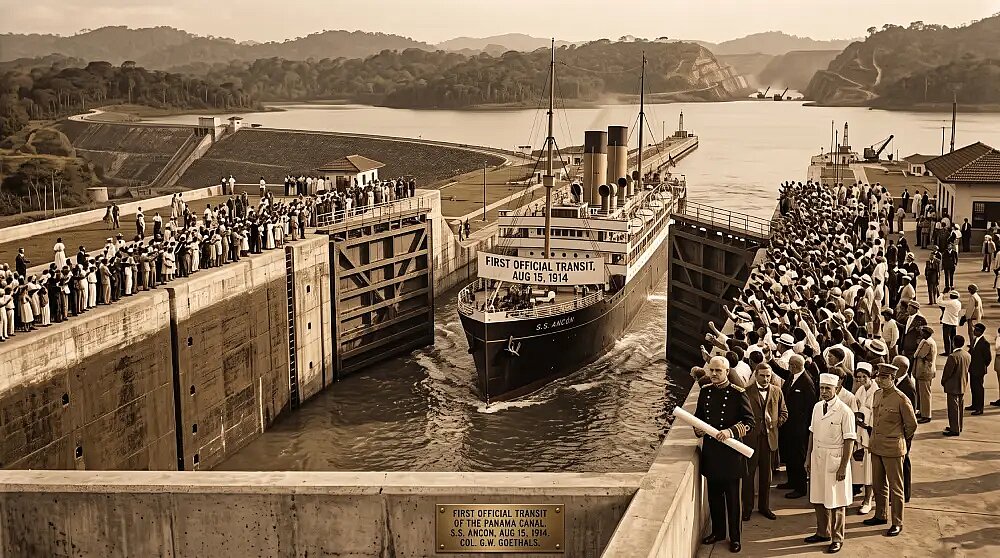
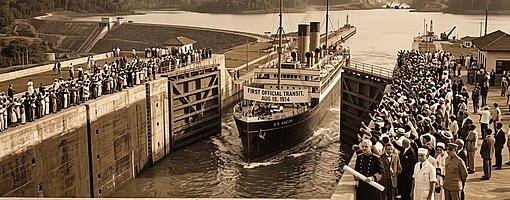
The construction was a titanic operation: over 200 million cubic meters of earth were excavated, the Gatún Dam was built — then the largest artificial lake in the world — and the massive concrete locks were erected. On August 15, 1914, the steamship Ancón made the first official transit, though World War I overshadowed the celebration.
- 1977–1999
-
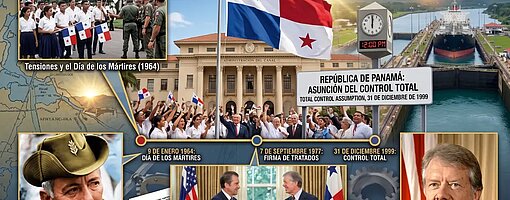
Transition to Panamanian Control
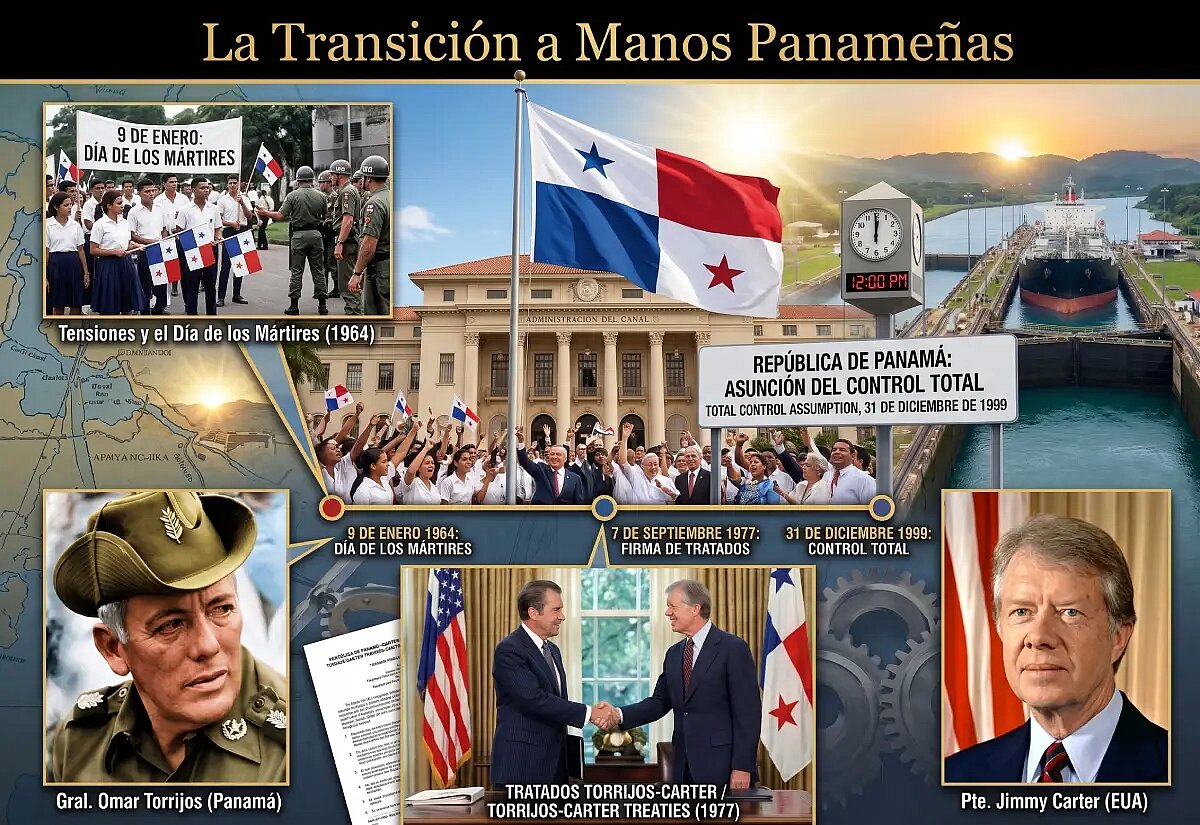
Tensions between Panama and the United States over the Canal Zone grew for decades. On January 9, 1964, student riots — known as Martyrs' Day — left more than 20 Panamanians dead and marked a turning point in bilateral relations.
In 1977, President Jimmy Carter and General Omar Torrijos signed the Torrijos-Carter Treaties, establishing the gradual transfer of the Canal to Panama. On December 31, 1999, at noon, the Panamanian flag was raised over the Canal Administration Building, and the Republic of Panama assumed full control of its most strategic resource.