Coiba National Park
Veraguas
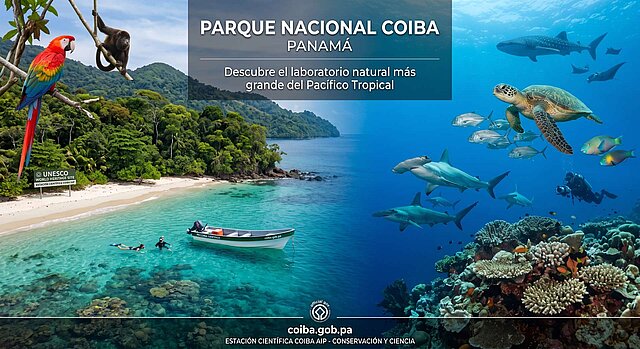
Dive into Coiba National Park, a UNESCO World Heritage Site. Swim with whale sharks, hammerheads, and giant manta rays on the largest coral reef of the Pacific Americas. Explore the virgin rainforest of Central America's largest island and discover unique endemic species.
Coiba National Park: The Marine Jewel of the Panamanian Pacific
Off the coast of Veraguas province lies one of the most extraordinary natural sanctuaries in Central America: Coiba National Park. Declared a UNESCO World Heritage Site in 2005, this 38-island archipelago protects marine and terrestrial ecosystems of such exceptional beauty and biodiversity that it has been compared to the Galápagos Islands.
The main island, Coiba, is the largest in the Central American Pacific at 503 square kilometers. For nearly a century it served as a penal colony, which paradoxically preserved its forests and seas from human development. Today, Coiba is a living laboratory where endemic and migratory species coexist in an almost untouched ecosystem.
World-Class Diving
Coiba is one of the planet's best diving destinations. Its crystal-clear waters, with visibility up to 30 meters, host the largest coral reef on the Pacific coast of the Americas. The marine biodiversity is breathtaking:
- Whale sharks (December to April)
- Hammerhead sharks in large schools
- Giant manta rays
- Sea turtles (hawksbill, green, and leatherback)
- Dolphins and humpback whales (July to October)
- More than 760 species of fish
- 33 species of sharks
Dive sites such as Bajo Negro, Contreras, Granito de Oro, and La Catedral are internationally renowned. Several dive operators offer excursions from Santa Catalina and from Coiba Island itself.
Terrestrial Nature
Eighty percent of the main island is covered by primary tropical forest. Endemic species such as the Coiban agouti, the local subspecies of howler monkey, and the crested eagle inhabit these forests. It is also home to exotic birds like the scarlet macaw, successfully reintroduced to the island. Ecological trails let you venture deep into this pristine jungle, where enormous century-old trees rise toward the canopy.
How to Visit
The main departure point is the coastal town of Santa Catalina, a famous surf destination. From there, boats take approximately 1.5 hours to reach the island. You can also access it from Pixvae and other coastal communities in Veraguas. Hiring a certified guide and paying park entrance fees is mandatory. The best time to visit is during the dry season, from December to April, when the waters are clearest and the sea is calm.